
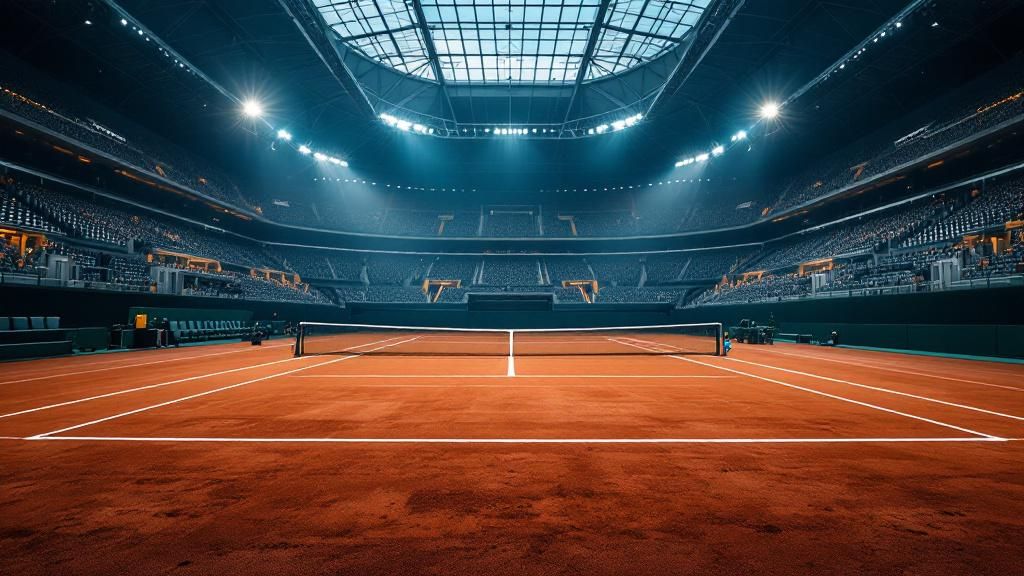
Real Madrid’s iconic Bernabeu stadium will provide a practice court for the world’s top-tier tennis players ahead of the Madrid Open the following month. The renowned facility will temporarily swap grass with clay between 23 and 26 April, offering top-ranked competitors including Spanish world number one Carlos Alcaraz an occasion to perfect their preparations for one of professional tennis’s largest competitions outside the Grand Slams. The training sessions, which will mirror the clay surfaces used at the tournament’s primary location, the Caja Magica, will not be open to the public. The Madrid Open, which runs from 20 April through 3 May, combines both the ATP and WTA tours, making it one of the sport’s most esteemed combined events.
A arena converted for the sport of tennis
The decision to use the Bernabeu constitutes an innovative solution to a growing operational difficulty facing the Madrid Open. The tournament’s growth to singles draws featuring 96 players played over a fortnight, alongside the addition of doubles events, has strained the capacity of the Caja Magica beyond its workable constraints. By securing access to one of global football’s most iconic stadiums, organisers have managed to accommodate the tournament’s ambitious growth whilst preserving the standard of preparation facilities available to the world’s leading competitors.
Tournament director Feliciano Lopez highlighted that the move serves a genuine sporting purpose rather than simply operating as a marketing campaign. “The goal is to have a suitable practice facility which helps them – it’s not just a marketing opportunity,” the three-time Wimbledon quarter-finalist told BBC Sport. Lopez stressed that since news of the arrangement broke, he has fielded multiple requests from players and coaching teams eager to use the facility. Real Madrid have no home fixtures scheduled during the week when their recently refurbished stadium will be transformed for tennis purposes.
- Training opportunities available to elite players during 23-26 April
- Court surfaces will precisely mirror the Caja Magica clay
- Public access to practice sessions will not be permitted
- Tournament matches will take place only at Caja Magica venue
Why Madrid Open required extra amenities
The Madrid Open has experienced a substantial transformation in the past few years, moving away from a traditional tournament into one of professional tennis’s most forward-thinking and innovative events. The increase to 96-player singles draws held over a two-week period, alongside the addition of comprehensive doubles competitions, has produced extraordinary pressure on available infrastructure. Tournament organisers found themselves facing a serious capacity issue at their traditional home, the Caja Magica, which could not accommodate the increased participant numbers whilst preserving the elevated standards required by the world’s elite players and their support staff.
This expansion demonstrates the tournament’s growing prestige and commercial appeal within the elite tennis circuit. As one of the most significant events outside the major championships, the Madrid Open draws the sport’s biggest names and generates considerable worldwide engagement. However, this accomplishment led to a paradox: the very acclaim that rendered the tournament so prized also taxed its venue facilities. Tournament director Feliciano Lopez recognised that innovative solutions were crucial to sustain the event’s growth path and continue attracting world-class players from both ATP and WTA competitors.
Expanding beyond the original venue
The Caja Magica, positioned about five miles south of central Madrid, has been the Madrid Open’s venue for years. However, the venue’s shortcomings became more obvious as the tournament expanded its scope and ambition. The facility, whilst adequate for the tournament’s traditional format, found it difficult to offer sufficient practice courts and preparation areas for the substantially expanded player contingent now participating in the event. This restriction had the potential to damage the quality of preparation available to competitors.
By obtaining use of the Bernabeu, organisers have effectively solved this operational challenge whilst at the same time creating considerable commercial advantage. The celebrated football venue’s transformation into a tennis facility demonstrates imaginative problem resolution at the highest organisational level. The setup enables the event to preserve its competitive standards and competitor fulfilment whilst pursuing its aggressive growth trajectory, confirming the Madrid Open stays among professional tennis’s most coveted and adequately funded events.
Real Madrid’s athletic aspirations expand
Real Madrid’s decision to host a practice court at the Bernabeu demonstrates a calculated diversification of the club’s athletic interests past traditional football. The 15-time European Cup winners have displayed their openness to creative collaborations that enhance their iconic stadium’s international standing. By welcoming the world’s leading tennis talent to one of sport’s most iconic locations, Real Madrid has positioned itself as a innovative club capable of hosting premier competitions across various sports. This move supports the club’s broader vision of the Bernabeu as a multifunctional sporting destination, following its recently completed renovation that transformed it into a cutting-edge venue.
The structure carries minimal interference to Real Madrid’s competitive schedule, as the club has carefully scheduled the court construction to avoid major domestic fixtures. Should Real Madrid advance past the quarter-final stage against Bayern Munich, any subsequent matches with Liverpool or Paris St-Germain would be played away from home throughout that timeframe. This careful coordination ensures the football club’s sporting priorities remain uncompromised whilst continuing to exploit the business and marketing prospects presented by hosting one of tennis’s premier tournaments. The collaboration demonstrates how contemporary sports bodies can leverage their facilities and established reputation to enhance their standing within the wider sports landscape.
| Feature | Details |
|---|---|
| Practice court dates | 23–26 April 2026 |
| Tournament dates | 20 April – 3 May 2026 |
| Court surface | Clay, matching Caja Magica specifications |
| Public access | Not open to spectators |
Tournament director Feliciano Lopez has been clear that this arrangement reflects a legitimate competitive venture rather than a cosmetic commercial venture. The former world number 13 has drawn significant attention from players and coaching teams wanting to access the Bernabeu’s training amenities during their competitive build-up. Lopez’s vision emphasises tangible advantage for athletes, ensuring the partnership serves the competition’s sporting standards and player welfare above all other factors.
Innovative marketing approach combines with practical purpose
The Madrid Open has firmly positioned itself as a tournament willing to push boundaries and defy tradition within professional tennis. From unveiling an striking blue clay surface to employing models as ball kids, the event has consistently sought to attract worldwide interest through creative initiatives. Director Feliciano Lopez has stressed that the organisation takes pride in pioneering methods and embracing strategic risk-taking to provide new experiences for players and spectators alike. This latest project at the Bernabeu marks the natural evolution of that philosophy, combining the iconic stadium’s worldwide recognition with genuine performance advantages.
Beneath the prestigious surface of hosting matches at one of world football’s most prestigious venues lies a genuine requirement driving the decision. The Madrid Open’s expansion to 96-competitor singles draws contested over a fortnight, alongside extensive doubles competitions, has rapidly outgrown the Caja Magica’s capacity. By leveraging the Bernabeu’s expansive facilities for competitor training, organisers tackle genuine logistical constraints whilst simultaneously generating substantial marketing value. This two-pronged strategy ensures the partnership delivers substantive benefits to competitors rather than functioning purely as a marketing spectacle removed from sporting reality.
- Blue clay surface added to improve the visual presentation and broadcast quality
- Fashion models assigned as ball kids during recent tournament editions
- Virtual tournament staged during the 2020 pandemic using gaming consoles
- Tournament expansion requires extra courts surpassing Caja Magica capacity
- Practice court installation addresses player preparation needs authentically
Exploring prospects for tennis at the Bernabeu
Whilst the existing arrangement is limited to practice facilities, the triumph of this opening partnership could possibly reshape how the Madrid Open runs in the years ahead. Tournament director Lopez has been careful to temper expectations, stating that hosting tournament matches at the Bernabeu continues to be outside the organisation’s near-term plans. However, the example established by other significant tournaments must not be entirely dismissed. The Miami Open’s integration of a showcase court within the Hard Rock Stadium demonstrates that such setups are feasible at world-class sporting venues, should circumstances and operational factors work out positively in later editions.
For now, the focus stays firmly on providing concrete gains to the world’s leading competitors during the crucial training stage before the main tournament starts at the Caja Magica. The availability of a world-class practice venue at one of international sport’s most prestigious stadiums provides an unprecedented chance for athletes to refine their clay-surface techniques. Whether this proves a one-off spectacle or the groundwork for a sustained partnership will eventually hinge on how effectively the programme addresses player needs whilst upholding the event’s standing for innovation and quality.
